

Solving Mathematical Problems A Personal Perspective Pdf Download
Australian-American mathematician
| Terence Chi-Shen Tao | |
|---|---|
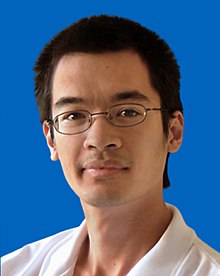 | |
| Born | (1975-07-17) 17 July 1975 (age 46) Adelaide, South Australia, Australia |
| Citizenship | Australia[1] United States[1] |
| Alma mater |
|
| Known for | Green–Tao theorem Erdős discrepancy problem Compressed sensing Tao's inequality Kakeya conjecture Bounding the de Bruijn-Newman constant Horn conjecture Cramer conjecture Collatz conjecture Navier-Stokes existence and smoothness Uncountable Moore-Schmidt theorem Sendov's conjecture Singmaster's conjecture |
| Spouse(s) | Laura Tao |
| Children | 2 |
| Awards | Fields Medal (2006) List
|
| Scientific career | |
| Fields | Mathematics |
| Institutions | UCLA |
| Thesis | Three Regularity Results in Harmonic Analysis[1] (1996) |
| Doctoral advisor | Elias M. Stein |
| Doctoral students | Monica Vișan |
| Website | www terrytao |
| Terence Tao | |||||||||||||||||||
|---|---|---|---|---|---|---|---|---|---|---|---|---|---|---|---|---|---|---|---|
| Traditional Chinese | 陶哲軒 | ||||||||||||||||||
| Simplified Chinese | 陶哲轩 | ||||||||||||||||||
| |||||||||||||||||||
Terence Chi-Shen Tao FAA FRS (born 17 July 1975) is an Australian-American mathematician. He is a professor of mathematics at the University of California, Los Angeles (UCLA), where he holds the James and Carol Collins chair. His research includes topics in harmonic analysis, partial differential equations, algebraic combinatorics, arithmetic combinatorics, geometric combinatorics, probability theory, compressed sensing and analytic number theory.[2]
He was a recipient of the 2006 Fields Medal and the 2014 Breakthrough Prize in Mathematics. He is also a 2006 MacArthur Fellow. Tao has been the author or co-author of over three hundred research papers.[3] He is widely regarded as one of the greatest living mathematicians.[4] [5] [6] [7] [8]
Personal life [edit]
Family [edit]
Tao's parents are first-generation immigrants from Hong Kong to Australia.[9] Tao's father, Billy Tao (Chinese: 陶象國; pinyin: Táo Xiàngguó ), was a paediatrician who was born in Shanghai, China, and earned his medical degree (MBBS) from the University of Hong Kong in 1969.[10] Tao's mother, Grace (Chinese: 梁蕙蘭; Jyutping: Loeng4 Wai6-laan4 ), is from Hong Kong; she received a first-class honours degree in astrophysics and mathematics at the University of Hong Kong.[11] She was a secondary school teacher of mathematics and physics in Hong Kong.[12] Billy and Grace met as students at the University of Hong Kong.[13] They then emigrated from Hong Kong to Australia in 1972.[9] [11]
Tao also has two brothers, who are living in Australia. Both formerly represented the country at the International Mathematical Olympiad.[14] Tao's wife is an electrical engineer at NASA's Jet Propulsion Laboratory.[11] [15] They live with their son and daughter in Los Angeles, California.[11]

Childhood [edit]
A child prodigy,[16] Tao exhibited extraordinary mathematical abilities from an early age, attending university-level mathematics courses at the age of 9. He is one of only two children in the history of the Johns Hopkins' Study of Exceptional Talent program to have achieved a score of 700 or greater on the SAT math section while just eight years old; Tao scored a 760.[17] [18] Julian Stanley, Director of the Study of Mathematically Precocious Youth, stated that he had the greatest mathematical reasoning ability he had found in years of intensive searching.[19] Tao was the youngest participant to date in the International Mathematical Olympiad, first competing at the age of ten; in 1986, 1987, and 1988, he won a bronze, silver, and gold medal, respectively. He remains the youngest winner of each of the three medals in the Olympiad's history, having won the gold medal at the age of 13 in 1988.[20]
Career [edit]

Dr. Tao (second from left) with UCLA undergraduate students in 2021
At age 14, Tao attended the Research Science Institute. When he was 15, he published his first assistant paper. In 1991, he received his bachelor's and master's degrees at the age of 16 from Flinders University under the direction of Garth Gaudry.[21] In 1992, he won a Postgraduate Fulbright Scholarship to undertake research in mathematics at Princeton University in the United States. From 1992 to 1996, Tao was a graduate student at Princeton University under the direction of Elias Stein, receiving his PhD at the age of 21.[21] In 1996, he joined the faculty of the University of California, Los Angeles. In 1999, when he was 24, he was promoted to full professor at UCLA and remains the youngest person ever appointed to that rank by the institution.[21]
Research and awards [edit]
Within the field of mathematics, Tao is known for his collaboration with British mathematician Ben J. Green; together they proved the Green–Tao theorem. Known for his collaborative mindset, by 2006, Tao had worked with over 30 others in his discoveries,[22] reaching 68 co-authors by October 2015.
In a book review, the British mathematician Timothy Gowers remarked on Tao's accomplishments:[23]
Tao's mathematical knowledge has an extraordinary combination of breadth and depth: he can write confidently and authoritatively on topics as diverse as partial differential equations, analytic number theory, the geometry of 3-manifolds, nonstandard analysis, group theory, model theory, quantum mechanics, probability, ergodic theory, combinatorics, harmonic analysis, image processing, functional analysis, and many others. Some of these are areas to which he has made fundamental contributions. Others are areas that he appears to understand at the deep intuitive level of an expert despite officially not working in those areas. How he does all this, as well as writing papers and books at a prodigious rate, is a complete mystery. It has been said that David Hilbert was the last person to know all of mathematics, but it is not easy to find gaps in Tao's knowledge, and if you do then you may well find that the gaps have been filled a year later.
Tao has won numerous mathematician honours and awards over the years.[24]
He is a Fellow of the Royal Society, the Australian Academy of Science (Corresponding Member), the National Academy of Sciences (Foreign member), the American Academy of Arts and Sciences, the American Philosophical Society,[25] and the American Mathematical Society.[26] In 2006 he received the Fields Medal "for his contributions to partial differential equations, combinatorics, harmonic analysis and additive number theory", and was also awarded the MacArthur Fellowship. He has been featured in The New York Times, CNN, USA Today, Popular Science, and many other media outlets.[27]
As of 2019, Tao has published nearly 350 research papers and 18 books.[28] He has an Erdős number of 2.[29] He is a highly cited researcher.[30] [31]
In 2018, with Brad Rodgers, Tao improved the lower bound for the de Bruijn–Newman constant.[32] In 2019, using probability theory, Tao proved for the Collatz Conjecture that almost all Collatz orbits attain almost bounded values.[33] In 2020, Tao proved Sendov's conjecture for large .[34]

Tao has also been a member of notable scientific bodies. In 2021, President Joe Biden announced Tao had been selected as one of 30 members of his President's Council of Advisors on Science and Technology, a body bringing together America's most distinguished leaders in science and technology.[35]
In 2021, Tao was awarded the Riemann Prize Week as recipient of the inaugural Riemann Prize 2019 by the Riemann International School of Mathematics at the University of Insubria.[36]
Green–Tao theorem and compressed sensing [edit]
In 2004, Ben Green and Tao released a preprint proving what is now known as the Green–Tao theorem. This theorem states that there are arbitrarily long arithmetic progressions of prime numbers. The New York Times described it this way:[37] [38]
In 2004, Dr. Tao, along with Ben Green, a mathematician now at the University of Cambridge in England, solved a problem related to the Twin Prime Conjecture by looking at prime number progressions—series of numbers equally spaced. (For example, 3, 7 and 11 constitute a progression of prime numbers with a spacing of 4; the next number in the sequence, 15, is not prime.) Dr. Tao and Dr. Green proved that it is always possible to find, somewhere in the infinity of integers, a progression of prime numbers of equal spacing and any length.
For this and other work Tao was awarded the Australian Mathematical Society Medal of 2004. He was awarded a Fields Medal in August 2006 at the 25th International Congress of Mathematicians in Madrid. He was the first Australian, the first UCLA faculty member, and one of the youngest mathematicians to receive the award.[39] [40]
An article by New Scientist [41] writes of his ability:
Such is Tao's reputation that mathematicians now compete to interest him in their problems, and he is becoming a kind of Mr Fix-it for frustrated researchers. "If you're stuck on a problem, then one way out is to interest Terence Tao," says Charles Fefferman [professor of mathematics at Princeton University].[39]
Tao was a finalist to become Australian of the Year in 2007.[42] He is a corresponding member of the Australian Academy of Science, and in 2007 was elected as a Fellow of the Royal Society.[43] [44] In the same year Tao also published Tao's inequality,[45] an extension to the Szemerédi regularity lemma in the field of information theory.
In April 2008, Tao received the Alan T. Waterman Award, which recognizes an early career scientist for outstanding contributions in their field. In addition to a medal, Waterman awardees also receive a $500,000 grant for advanced research.[46]
In December 2008, he was named the Lars Onsager lecturer of 2008,[47] for "his combination of mathematical depth, width and volume in a manner unprecedented in contemporary mathematics". He was presented the Onsager Medal, and held his Lars Onsager lecture entitled "Structure and randomness in the prime numbers" at NTNU, Norway.[48]
Tao was also elected a Fellow of the American Academy of Arts and Sciences in 2009.[49]
In 2010, he received the King Faisal International Prize jointly with Enrico Bombieri.[50] Also in 2010, he was awarded the Nemmers Prize in Mathematics[51] and the George Pólya Prize jointly with Emmanuel Candès for their work on Compressed Sensing.[52]
Research contributions [edit]
Random matrices [edit]
In the 1950s, Eugene Wigner initiated the study of random matrices and their eigenvalues.[53] [54] Wigner studied the case of hermitian and symmetric matrices, proving a "semicircle law" for their eigenvalues. In 2010, Tao and Van Vu made a major contribution to the study of non-symmetric random matrices. They showed that if n is large and the entries of a n × n matrix A are selected randomly according to any fixed probability distribution of average 0 and standard deviation 1, then the eigenvalues of A will tend to be uniformly scattered across the disk of radius n 1/2 around the origin; this can be made precise using the language of measure theory. This gave a proof of the long-conjectured circular law, which had previously been proved in weaker formulations by many other authors. In Tao and Vu's formulation, the circular law becomes an immediate consequence of a "universality principle" stating that the distribution of the eigenvalues can depend only on the average and standard deviation of the given component-by-component probability distribution, thereby providing a reduction of the general circular law to a calculation for specially-chosen probability distributions.
In 2011, Tao and Vu established a "four moment theorem", which applies to random hermitian matrices whose components are independently distributed, each with average 0 and standard deviation 1, and which are exponentially unlikely to be large (as for a Gaussian distribution). If one considers two such random matrices which agree on the average value of any quadratic polynomial in the diagonal entries and on the average value of any quartic polynomial in the off-diagonal entries, then Tao and Vu show that the expected value of a large number of functions of the eigenvalues will also coincide, up to an error which is uniformly controllable by the size of the matrix and which becomes arbitrarily small as the size of the matrix increases. Similar results were obtained around the same time by László Erdös, Horng-Tzer Yau, and Jun Yin.[55] [56]
Analytic number theory and arithmetic combinatorics [edit]
In 2004, Tao, together with Jean Bourgain and Nets Katz, studied the additive and multiplicative structure of subsets of finite fields of prime order. It is well known that there are no nontrivial subrings of such a field. Bourgain, Katz, and Tao provided a quantitative formulation of this fact, showing that for any subset of such a field, the number of sums and products of elements of the subset must be quantitatively large, as compared to the size of the field and the size of the subset itself. Improvements of their result were later given by Bourgain, Alexey Glibichuk, and Sergei Konyagin.[57] [58]
In work published in 2008 but known since 2004, Tao and Ben Green proved the existence of arbitrarily long arithmetic progressions in the prime numbers; this result is generally referred to as the Green–Tao theorem. The source of Green and Tao's arithmetic progressions is Endre Szemerédi's seminal 1975 theorem on existence of arithmetic progressions in certain sets of integers. Green and Tao showed that one can use a "transference principle" to extend the validity of Szemerédi's theorem to further sets of integers. The Green–Tao theorem then arises as a special case, although it is not trivial to show that the prime numbers satisfy the conditions of Green and Tao's extension of the Szemerédi theorem.
In 2010, Green and Tao gave a multilinear extension of Dirichlet's celebrated theorem on arithmetic progressions. Given a k × n matrix A and a k × 1 matrix v whose components are all integers, Green and Tao give conditions on when there exist infinitely many n × 1 matrices x such that all components of Ax + v are prime numbers. The proof of Green and Tao was incomplete, as it was conditioned upon unproven conjectures. Those conjectures were proved in later work of Green, Tao, and Tamar Ziegler.
Other work [edit]
In 2012, in joint work with longtime co-author Ben Green, proofs were announced for the Dirac-Motzkin conjecture and the "orchard-planting problem" (which asks for the maximum number of lines through exactly 3 points in a set of n points in the plane, not all on a line). That same year, Tao published the first monograph on the topic of higher order Fourier analysis.
In 2014, Tao received a CTY Distinguished Alumni Honor from Johns Hopkins Center for Gifted and Talented Youth in front of 979 attendees in 8th and 9th grade that are in the same program from which Tao graduated. That year, Tao presented work on a possible attack on the Navier–Stokes existence and smoothness Millennium Problem, by establishing finite time blowup for an averaged three-dimensional Navier-Stokes equation. That year he also, jointly with several co-authors, proved several results on short and long prime gaps.
On 17 September 2015, Tao announced a proof of the Erdős discrepancy problem, using for the first time entropy-estimates within analytic number theory.[59]
Notable awards [edit]
- 1992 - Fulbright Scholarship
- 1999 - Packard Fellowship
- 2000 - Salem Prize for:[60]
-
- "his work in Lp harmonic analysis and on related questions in geometric measure theory and partial differential equations."
- 2002 - Bôcher Memorial Prize for:
-
- Global regularity of wave maps I. Small critical Sobolev norm in high dimensions. Internat. Math. Res. Notices (2001), no. 6, 299-328.
- Global regularity of wave maps II. Small energy in two dimensions. Comm. Math. Phys. 2244 (2001), no. 2, 443-544.
- in addition to "his remarkable series of papers, written in collaboration with J. Colliander, M. Keel, G. Staffilani, and H. Takaoka, on global regularity in optimal Sobolev spaces for KdV and other equations, as well as his many deep contributions to Strichartz and bilinear estimates."
- 2003 - Clay Research Award for:[61]
-
- his restriction theorems in Fourier analysis, his work on wave maps, his global existence theorems for KdV-type equations, and for his solution with Allen Knutson of Horn's conjecture
- 2005 - Australian Mathematical Society Medal
- 2005 - Ostrowski Prize (with Ben Green) for:
-
- "their exceptional achievements in the area of analytic and combinatorial number theory"
- 2005 - Levi L.Conant Prize (with Allen Knutson) for:
-
- their expository article "Honeycombs and Sums of Hermitian Matrices" (Notices of the AMS. 48 (2001), 175–186.)
- 2006 - Fields Medal for:
-
- "his contributions to partial differential equations, combinatorics, harmonic analysis and additive number theory"
- 2006 - MacArthur Award
- 2006 - SASTRA Ramanujan Prize
- 2006 - Sloan Fellowship
- 2007 - Fellow of the Royal Society
- 2008 - Alan T. Waterman Award for:
-
- "his surprising and original contributions to many fields of mathematics, including number theory, differential equations, algebra, and harmonic analysis"
- 2008 - Onsager Medal
- 2009 - Inducted into the American Academy of Arts and Sciences
- 2010 - King Faisal International Prize
- 2010 - Nemmers Prize in Mathematics
- 2010 - Polya Prize (with Emmanuel Candès)
- 2012 - Crafoord Prize[62] [63]
- 2012 - Simons Investigator[64]
- 2014 - Breakthrough Prize in Mathematics
-
- "For numerous breakthrough contributions to harmonic analysis, combinatorics, partial differential equations and analytic number theory."
- 2014 - Royal Medal
- 2015 - PROSE award in the category of "Mathematics" for:[65]
-
- "Hilbert's Fifth Problem and Related Topics" ISBN 978-1-4704-1564-8
- 2019 - Riemann Prize[66]
- 2020 - Princess of Asturias Award for Technical and Scientific Research,[67] with Emmanuel Candès, for their work on compressed sensing
- 2020 - Bolyai Prize[68]
- 2021 - IEEE Jack S. Kilby Signal Processing Medal
- 2021 - USIA Award
Major publications [edit]
Textbooks
- Solving mathematical problems. A personal perspective. Oxford University Press, Oxford, 2006. xii+103 pp. ISBN 978-0-19-920560-8, 0-19-920560-4
- Nonlinear dispersive equations. Local and global analysis. CBMS Regional Conference Series in Mathematics, 106. Published for the Conference Board of the Mathematical Sciences, Washington, DC; by the American Mathematical Society, Providence, RI, 2006. xvi+373 pp. ISBN 0-8218-4143-2
- Structure and randomness. Pages from year one of a mathematical blog. American Mathematical Society, Providence, RI, 2008. xii+298 pp. ISBN 978-0-8218-4695-7
- Poincaré's legacies, pages from year two of a mathematical blog. Part I. American Mathematical Society, Providence, RI, 2009. x+293 pp. ISBN 978-0-8218-4883-8
- Poincaré's legacies, pages from year two of a mathematical blog. Part II. American Mathematical Society, Providence, RI, 2009. x+292 pp. ISBN 978-0-8218-4885-2
- An epsilon of room, I: real analysis. Pages from year three of a mathematical blog. Graduate Studies in Mathematics, 117. American Mathematical Society, Providence, RI, 2010. xii+349 pp. ISBN 978-0-8218-5278-1
- An epsilon of room, II. Pages from year three of a mathematical blog. American Mathematical Society, Providence, RI, 2010. viii+248 pp. ISBN 978-0-8218-5280-4
- (with Van H. Vu) Additive combinatorics. Cambridge Studies in Advanced Mathematics, 105. Cambridge University Press, Cambridge, 2010. xviii+512 pp. ISBN 978-0-521-13656-3[69]
- An introduction to measure theory. Graduate Studies in Mathematics, 126. American Mathematical Society, Providence, RI, 2011. xvi+206 pp. ISBN 978-0-8218-6919-2
- Topics in random matrix theory. Graduate Studies in Mathematics, 132. American Mathematical Society, Providence, RI, 2012. x+282 pp. ISBN 978-0-8218-7430-1
- Higher order Fourier analysis. Graduate Studies in Mathematics, 142. American Mathematical Society, Providence, RI, 2012. x+187 pp. ISBN 978-0-8218-8986-2
- Compactness and contradiction. American Mathematical Society, Providence, RI, 2013. xii+256 pp. ISBN 978-0-8218-9492-7
- Analysis. I. Third edition. Texts and Readings in Mathematics, 37. Hindustan Book Agency, New Delhi, 2014. xviii+347 pp. ISBN 978-93-80250-64-9
- Analysis. II. Third edition. Texts and Readings in Mathematics, 38. Hindustan Book Agency, New Delhi, 2014. xvi+218 pp. ISBN 978-93-80250-65-6
- Hilbert's fifth problem and related topics. Graduate Studies in Mathematics, 153. American Mathematical Society, Providence, RI, 2014. xiv+338 pp. ISBN 978-1-4704-1564-8
- Expansion in finite simple groups of Lie type. Graduate Studies in Mathematics, 164. American Mathematical Society, Providence, RI, 2015. xiv+303 pp. ISBN 978-1-4704-2196-0[70]
Research articles on dispersive partial differential equations
- Keel, Markus; Tao, Terence. Endpoint Strichartz estimates. Amer. J. Math. 120 (1998), no. 5, 955–980.
- Colliander, J.; Keel, M.; Staffilani, G.; Takaoka, H.; Tao, T. Global well-posedness for Schrödinger equations with derivative. SIAM J. Math. Anal. 33 (2001), no. 3, 649–669.
- Tao, Terence. Global regularity of wave maps. II. Small energy in two dimensions. Comm. Math. Phys. 224 (2001), no. 2, 443–544.
- Colliander, J.; Keel, M.; Staffilani, G.; Takaoka, H.; Tao, T. A refined global well-posedness result for Schrödinger equations with derivative. SIAM J. Math. Anal. 34 (2002), no. 1, 64–86.
- Colliander, J.; Keel, M.; Staffilani, G.; Takaoka, H.; Tao, T. Almost conservation laws and global rough solutions to a nonlinear Schrödinger equation. Math. Res. Lett. 9 (2002), no. 5–6, 659–682.
- Christ, Michael; Colliander, James; Tao, Terrence. Asymptotics, frequency modulation, and low regularity ill-posedness for canonical defocusing equations. Amer. J. Math. 125 (2003), no. 6, 1235–1293.
- Colliander, J.; Keel, M.; Staffilani, G.; Takaoka, H.; Tao, T. Sharp global well-posedness for KdV and modified KdV on and . J. Amer. Math. Soc. 16 (2003), no. 3, 705–749.
- Colliander, J.; Keel, M.; Staffilani, G.; Takaoka, H.; Tao, T. Multilinear estimates for periodic KdV equations, and applications. J. Funct. Anal. 211 (2004), no. 1, 173–218.
- Colliander, J.; Keel, M.; Staffilani, G.; Takaoka, H.; Tao, T. Global existence and scattering for rough solutions of a nonlinear Schrödinger equation on 3. Comm. Pure Appl. Math. 57 (2004), no. 8, 987–1014.
- Tao, Terence. Global well-posedness of the Benjamin-Ono equation in H 1( ). J. Hyperbolic Differ. Equ. 1 (2004), no. 1, 27–49.
- Bejenaru, Ioan; Tao, Terence. Sharp well-posedness and ill-posedness results for a quadratic non-linear Schrödinger equation. J. Funct. Anal. 233 (2006), no. 1, 228–259.
- Tao, Terence; Visan, Monica; Zhang, Xiaoyi. The nonlinear Schrödinger equation with combined power-type nonlinearities. Comm. Partial Differential Equations 32 (2007), no. 7–9, 1281–1343.
- Colliander, J.; Keel, M.; Staffilani, G.; Takaoka, H.; Tao, T. Global well-posedness and scattering for the energy-critical nonlinear Schrödinger equation in 3. Ann. of Math. (2) 167 (2008), no. 3, 767–865.
- Killip, Rowan; Tao, Terence; Visan, Monica. The cubic nonlinear Schrödinger equation in two dimensions with radial data. J. Eur. Math. Soc. (JEMS) 11 (2009), no. 6, 1203–1258.


Research articles on compressed sensing
- Candes, Emmanuel J.; Tao, Terence. Decoding by linear programming. IEEE Trans. Inform. Theory 51 (2005), no. 12, 4203–4215.
- Candes, Emmanuel J.; Tao, Terence. Near-optimal signal recovery from random projections: universal encoding strategies? IEEE Trans. Inform. Theory 52 (2006), no. 12, 5406–5425.
- Candès, Emmanuel J.; Romberg, Justin K.; Tao, Terence. Stable signal recovery from incomplete and inaccurate measurements. Comm. Pure Appl. Math. 59 (2006), no. 8, 1207–1223.
- Candès, Emmanuel J.; Romberg, Justin; Tao, Terence. Robust uncertainty principles: exact signal reconstruction from highly incomplete frequency information. IEEE Trans. Inform. Theory 52 (2006), no. 2, 489–509.
- Candes, Emmanuel; Tao, Terence. The Dantzig selector: statistical estimation when p is much larger than n. Ann. Statist. 35 (2007), no. 6, 2313–2351.
- Candès, Emmanuel J.; Tao, Terence. The power of convex relaxation: near-optimal matrix completion. IEEE Trans. Inform. Theory 56 (2010), no. 5, 2053–2080.
Research articles on analytic number theory
- Bourgain, J.; Katz, N.; Tao, T. A sum-product estimate in finite fields, and applications. Geom. Funct. Anal. 14 (2004), no. 1, 27–57.
- Green, Ben; Tao, Terence. The primes contain arbitrarily long arithmetic progressions. Ann. of Math. (2) 167 (2008), no. 2, 481–547.
- Green, Benjamin; Tao, Terence. Linear equations in primes. Ann. of Math. (2) 171 (2010), no. 3, 1753–1850.
Research articles on random matrices
- Tao, Terence; Vu, Van. Random matrices: universality of ESDs and the circular law. With an appendix by Manjunath Krishnapur. Ann. Probab. 38 (2010), no. 5, 2023–2065.
- Tao, Terence; Vu, Van. Random matrices: universality of local eigenvalue statistics. Acta Math. 206 (2011), no. 1, 127–204.
Research articles on harmonic analysis
- Tao, Terence; Vargas, Ana; Vega, Luis. A bilinear approach to the restriction and Kakeya conjectures. J. Amer. Math. Soc. 11 (1998), no. 4, 967–1000.
- Tao, Terence. Multilinear weighted convolution of L2-functions, and applications to nonlinear dispersive equations. Amer. J. Math. 123 (2001), no. 5, 839–908.
- Muscalu, Camil; Tao, Terence; Thiele, Christoph. Multi-linear operators given by singular multipliers. J. Amer. Math. Soc. 15 (2002), no. 2, 469–496.
- Tao, T. A sharp bilinear restrictions estimate for paraboloids. Geom. Funct. Anal. 13 (2003), no. 6, 1359–1384.
- Tao, Terence. Fuglede's conjecture is false in 5 and higher dimensions. Math. Res. Lett. 11 (2004), no. 2–3, 251–258.
- Bennett, Jonathan; Carbery, Anthony; Tao, Terence. On the multilinear restriction and Kakeya conjectures. Acta Math. 196 (2006), no. 2, 261–302.
Research articles on algebraic combinatorics
See also [edit]
- Erdős discrepancy problem
- Influence of non-standard analysis
- Inscribed square problem
- Lonely runner conjecture
- Goldbach's weak conjecture
- Cramer conjecture
- Navier-Stokes existence and smoothness
References [edit]
- ^ a b c "Vitae and Bibliography for Terence Tao". 12 October 2009. Retrieved 21 January 2010.
- ^ "Mathematician Proves Huge Result on 'Dangerous' Problem". 11 December 2019. Archived from the original on 23 October 2021.
- ^ "Search | arXiv e-print repository".
- ^ Cook, Gareth (24 July 2015). "The Singular Mind of Terry Tao (Published 2015)". The New York Times. ISSN 0362-4331. Retrieved 15 February 2021.
- ^ "Primed for Success". 2 October 2007.
- ^ "PRESIDENT'S COUNCIL OF ADVISORS ON SCIENCE AND TECHNOLOGY: Terence Tao, PhD". 2021.
- ^ "Terence Tao, 'Mozart of Math,' is first UCLA math prof to win Fields Medal". 8 August 2006.
- ^ "Meet the Greatest Mathematician (probably) of the Decade". 8 August 2006.
- ^ a b Wen Wei Po, Page A4, 24 August 2006.
- ^ Dr Billy Tao, Healthshare.
- ^ a b c d Terence Tao: the Mozart of maths, 7 March 2015, Stephanie Wood, The Sydney Morning Herald.
- ^ Oriental Daily, Page A29, 24 August 2006.
- ^ Terence Chi-Shen Tao, MacTutor History of Mathematics archive, School of Mathematics and Statistics, University of St Andrews, Scotland.
- ^ Nigel makes Waves: Google's bid to overthrow email, Asher Moses, Sydney Morning Herald, 2009-10-02
- ^ "History, Travel, Arts, Science, People, Places - Smithsonian". Archived from the original on 10 September 2012. Retrieved 5 September 2015.
- ^ Clements, M. A. (Ken) (1984), "Terence Tao", Educational Studies in Mathematics, 15 (3): 213–238, doi:10.1007/BF00312075, JSTOR 3482178, S2CID 189827772 .
- ^ Radical acceleration in Australia: Terence Tao
- ^ Cook, Gareth (24 July 2015). "The Singular Mind of Terry Tao". The New York Times.
- ^ "Radical Acceleration in Australia: Terence Tao". www.davidsongifted.org. Archived from the original on 23 October 2021.
- ^ "International Mathematical Olympiad".
- ^ a b c It's prime time as numbers man Tao tops his Field Stephen Cauchi, 23 August 2006. Retrieved 31 August 2006.
- ^ The Singular Mind of Terry Tao, 26 July 2015, www.nytimes.com
- ^ Mathematical Reviews MR2523047, Review by Timothy Gowers of Terence Tao's Poincaré's legacies, part I, http://mathscinet
- ^ "Vitae". UCLA. Retrieved 5 September 2015.
- ^ "APS Member History". search.amphilsoc.org . Retrieved 19 March 2021.
- ^ List of Fellows of the American Mathematical Society, retrieved 2013-08-25.
- ^ "Media information". UCLA. Archived from the original on 23 October 2021. Retrieved 5 September 2015.
- ^ http://ams.math.uni-bielefeld.de/mathscinet/search/publications.html?pg1=IID&s1=361755 [ permanent dead link ]
- ^ "Who am I?". UCLA. Archived from the original on 23 October 2021. Retrieved 5 September 2015.
- ^ "Terence Tao's Publons profile". publons.com. Archived from the original on 23 October 2021. Retrieved 6 February 2021.
- ^ "Highly Cited Researchers". publons.com. Archived from the original on 23 October 2021. Retrieved 6 February 2021.
- ^ Rodgers, Brad; Tao, Terence (6 April 2020). "The De Bruijn-Newman constant is non-negative". Forum of Mathematics, Pi. 8: e6. arXiv:1801.05914. doi:10.1017/fmp.2020.6. .
- ^ Tao, Terence (2019). "Almost all orbits of the Collatz map attain almost bounded values". arXiv:1909.03562 [math.PR].
- ^ Tao, Terence (2020). "Sendov's conjecture for sufficiently high degree polynomials". arXiv:2012.04125 [math.CV].
- ^ "President Biden Announces Members of President's Council of Advisors on Science and Technology". White House. 22 September 2021. Archived from the original on 23 October 2021.
- ^ "Terence Tao, il matematico con il QI più alto al mondo: "Non so cantare e ho fallito un paio di esami""". Huffington Post Italy. 21 September 2021. Archived from the original on 23 October 2021.
- ^ Kenneth Chang (13 March 2007). "Journeys to the Distant Fields of Prime". The New York Times. Archived from the original on 23 October 2021.
- ^ "Corrections: For the Record". The New York Times. 13 March 2007. Archived from the original on 23 October 2021.
- ^ a b "2006 Fields Medals awarded" (PDF). Notices of the American Mathematical Society. 53 (9): 1037–1044. October 2006. Archived from the original (PDF) on 2 November 2006.
- ^ "Reclusive Russian turns down math world's highest honour". Canadian Broadcasting Corporation (CBC). 22 August 2006. Archived from the original on 23 October 2021. Retrieved 26 August 2006.
- ^ NewScientist.com, Prestigious Fields Medals for mathematics awarded, 22 August 2006.
- ^ National Australia Day Committee, 2007 Australian of the Year Finalists. Retrieved 2013-03-12.
- ^ Annual report Archived 7 June 2011 at the Wayback Machine, Australian Academy of Science, 2008.
- ^ Fellows and Foreign Members of the Royal Society, retrieved 2010-06-09.
- ^ http://www.mathematik.uni-bielefeld.de/ahlswede/homepage/public/217.pdf
- ^ National Science Foundation, Alan T. Waterman Award. Retrieved 2008-04-18.
- ^ "Archived copy". Archived from the original on 3 February 2009. Retrieved 13 January 2009. CS1 maint: archived copy as title (link)
- ^ NTNU's Onsager Lecture, by Terence Tao on YouTube
- ^ "Alphabetical Index of Active AAAS Members" (PDF). amacad.org. Archived from the original (PDF) on 5 October 2013. Retrieved 21 November 2013.
His 2009 induction ceremony is here. - ^ King Faisal Foundation – retrieved 2010-01-11.
- ^ "Major Math and Science Awards Announced: Northwestern University News". Archived from the original on 16 April 2010. Retrieved 5 September 2015.
- ^ "SIAM: George Pólya Prize". Archived from the original on 23 October 2021. Retrieved 5 September 2015.
- ^ Wigner, Eugene P. Characteristic vectors of bordered matrices with infinite dimensions. Annals of Mathematics (2) 62 (1955), 548–564.
- ^ Wigner, Eugene P. On the distribution of the roots of certain symmetric matrices. Ann. of Math. (2) 67 (1958), 325–327.
- ^ Erdős, László; Yau, Horng-Tzer; Yin, Jun (2012). "Rigidity of eigenvalues of generalized Wigner matrices". Advances in Mathematics. 229 (3): 1435–1515. doi:10.1016/j.aim.2011.12.010.
- ^ Erdős, László; Yau, Horng-Tzer; Yin, Jun. Bulk universality for generalized Wigner matrices. Probab. Theory Related Fields 154 (2012), no. 1-2, 341–407.
- ^ Bourgain, J. More on the sum-product phenomenon in prime fields and its applications. Int. J. Number Theory 1 (2005), no. 1, 1–32.
- ^ Bourgain, J.; Glibichuk, A.A.; Konyagin, S.V. Estimates for the number of sums and products and for exponential sums in fields of prime order. J. London Math. Soc. (2) 73 (2006), no. 2, 380–398.
- ^ "Terence Tao's Answer to the Erdős Discrepancy Problem". Quanta Magazine. October 2015. Archived from the original on 26 February 2019.
- ^ Mathematics People. Notices of the AMS
- ^ Clay Research Awards.
- ^ "The Crafoord Prize in Mathematics 2012 and The Crafoord Prize in Astronomy 2012". Royal Swedish Academy of Sciences. 19 January 2012. Archived from the original on 23 October 2021. Retrieved 13 November 2014.
- ^ "4 Scholars Win Crafoord Prizes in Astronomy and Math – The Ticker - Blogs - The Chronicle of Higher Education". Archived from the original on 23 October 2021. Retrieved 5 September 2015.
- ^ "Simons Investigators Awardees". Simons Foundation. Archived from the original on 23 October 2021. Retrieved 9 September 2017.
- ^ PROSE 2015 winners
- ^ "Riemann Prize laureate 2019: Terence Tao". Archived from the original on 20 December 2019. Retrieved 23 November 2019.
- ^ "Yves Meyer, Ingrid Daubechies, Terence Tao and Emmanuel Candès, Princess of Asturias Award for Technical and Scientific Research 2020". Princess of Asturias Foundation. Archived from the original on 26 June 2020. Retrieved 23 June 2020.
- ^ "Vitae and Bibliography for Terence Tao". UCLA. Retrieved 13 November 2020.
- ^ Green, Ben (2009). "Review: Additive combinatorics by Terence C. Tao and Van H. Vu" (PDF). Bull. Amer. Math. Soc. (N.S.). 46 (3): 489–497. doi:10.1090/s0273-0979-09-01231-2. Archived from the original (PDF) on 11 March 2012.
- ^ Lubotzky, Alexander (25 January 2018). "Review of Expansion in finite simple groups of Lie type by Terrence Tao". Bull. Amer. Math. Soc. (N.S.): 1. doi:10.1090/bull/1610; review published electronically CS1 maint: postscript (link)
External links [edit]
- Terence Tao's home page
- Tao's research blog
- Tao's MathOverflow page
- Beautiful minds THE AUSTRALIAN 11 August 2007
- O'Connor, John J.; Robertson, Edmund F., "Terence Tao", MacTutor History of Mathematics archive, University of St Andrews
- Terence Tao at the Mathematics Genealogy Project
- Terence Tao's entry in the Numericana Hall of Fame
- Terence Tao's results at International Mathematical Olympiad

- Videos of Terence Tao in the AV-Portal of German National Library of Science and Technology
- Video of Terence Tao's in Tel Aviv University - lecture of the Erdos discrepancy problem
Solving Mathematical Problems A Personal Perspective Pdf Download
Source: https://en.wikipedia.org/wiki/Terence_Tao
Posted by: crabtreelunarned.blogspot.com
0 Response to "Solving Mathematical Problems A Personal Perspective Pdf Download"
Post a Comment