

How To See A Template In Wordpress
One of the almost important selling points of WordPress is the idea of themes. A single theme adds bang-up value to the pattern and functionality of the website. However, there are websites that have different designs on different pages.
Unfortunately, several WordPress themes restrict users from altering layouts and functionality for a dissimilar page in the hierarchy. WordPress custom page template allows users to integrate custom requirements such as correct/left sidebar on a particular page, an additional call-to-activity functionality, or mayhap a unique header for a particular landing page. Permit's dive in further to run across how WordPress custom page template display different type of content.
A custom WordPress page template could be used for a number of purposes. Some ideas include:
- Evidence recent posts of each category
- Embed Google Map or any script
- Listing of all authors.
- Recently uploaded images
- Custom design page for the portfolio
- Contact page
The advent of all the pages and posts that are created on a WordPress website is handled by a template file named page.php. Creating or editing a custom page template in WordPress requires basic noesis of HTML, CSS, and PHP.
Managed WordPress Hosting Starting From $10/Month
Experience Faster WordPress Themes' Functioning & Constant Availability on Cloudways.
Simply open up any text editor and paste the post-obit code in it.
<?php /* Template Name: PageWithoutSidebar */ ?>
The above line of code tells WordPress that it is a template file called PageWithoutSidebar. You can use whatever name you lot want. Now save this file as PageWithoutSidebar.php. Again you can use any other name for the file. Merely don't forget to keep the extension as .php
Now, we're going to examination our newly created template file.
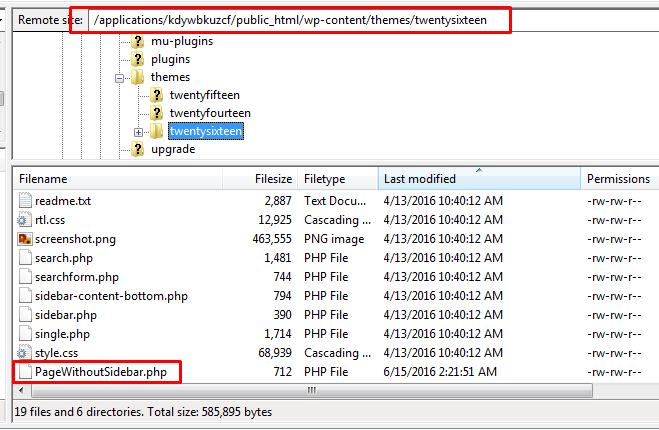
Login to your hosting panel. In this case, I am using Cloudways – A fastest managed WordPress hosting. Cloudways supports WordPress applications with the provider options for AWS, DigitalOcean, GCP, Linode and Vultr. Navigate to /wp-content/themes folder. Open your current theme folder and upload PageWithoutSidebar.php file in that location.
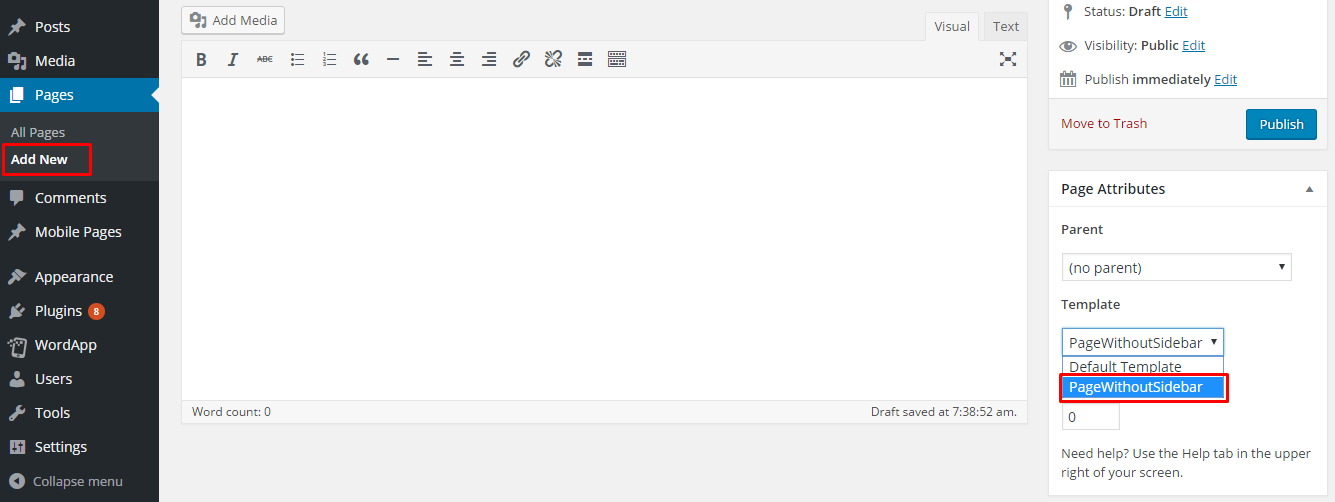
Go to WordPress Admin Panel > Pages > Add New. You can come across the new custom page template listed on the right side.
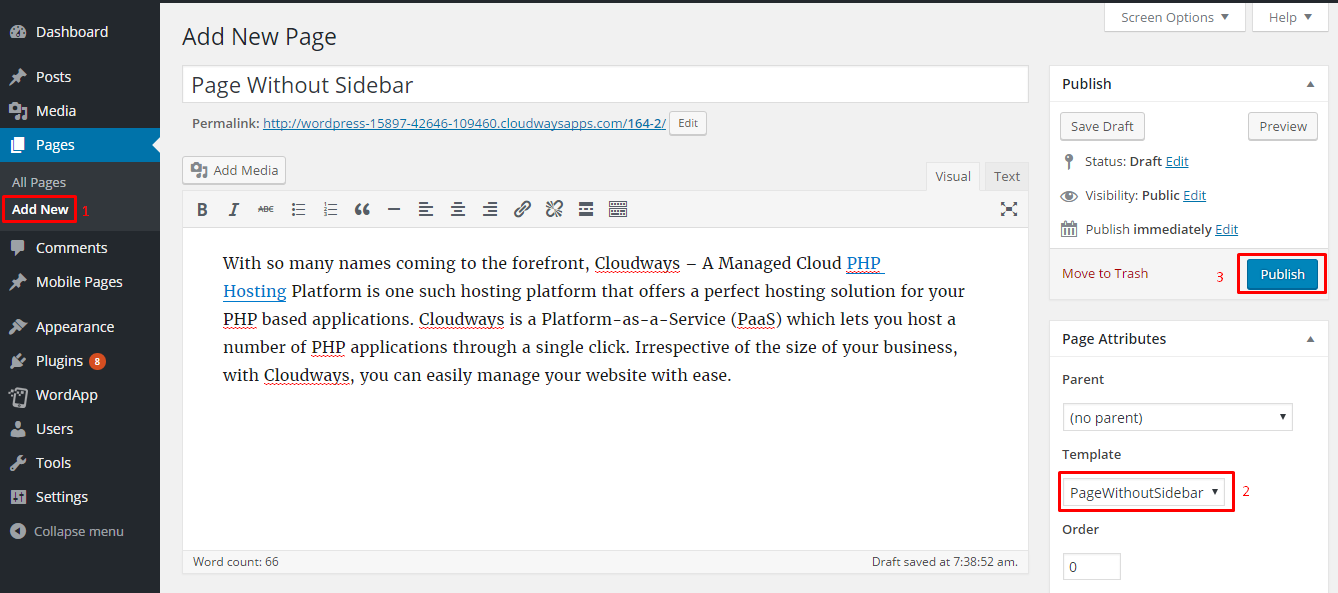
Create a new page and gear up its template to PageWithoutSidebar. Once done, Publish it.
Open the newly created folio. As there are no design elements in the template yet, a bare page like the paradigm below is displayed.
This shows that the custom page template in WordPress is successfully implemented, hence you tin create a custom responsive WordPress theme
Information technology is at present time to add a few lines of code to display the content of the folio.
For this demo, I volition talk over how you could customize the default 20 Sixteen folio template.
The default appearance of the pages is generated by page.php file located in /wp-contents/themes/YOUR THEME/ binder. Open folio.php and copy this code.
<?php get_header(); ?> <div id="primary" class="content-area"> <principal id="main" class="site-main" function="main"> <?php // Outset the loop. while ( have_posts() ) : the_post(); // Include the page content template. get_template_part( 'template-parts/content', 'folio' ); // If comments are open up or we have at least one comment, load up the comment template. if ( comments_open() || get_comments_number() ) { comments_template(); } // Terminate of the loop. endwhile; ?> </master><!-- .site-main --> <?php get_sidebar( 'content-bottom' ); ?> </div><!-- .content-expanse --> <?php get_sidebar(); ?> <?php get_footer(); ?> Paste this code into PageWithoutSidebar.php just below this line of code.
<?php /* Template Name: PageWithoutSidebar */ ?>
Salve it!
Your consummate PageWithoutSidebar.php file will look like beneath.
<?php /* Template Name: PageWithoutSidebar */ ?> <?php get_header(); ?> <div id="chief" class="content-surface area"> <main id="primary" class="site-main" office="main"> <?php // Offset the loop. while ( have_posts() ) : the_post(); // Include the page content template. get_template_part( 'template-parts/content', 'page' ); // If comments are open up or we have at least i comment, load up the comment template. if ( comments_open() || get_comments_number() ) { comments_template(); } // End of the loop. endwhile; ?> </master><!-- .site-primary --> <?php get_sidebar( 'content-bottom' ); ?> </div><!-- .content-area --> <?php get_sidebar(); ?> <?php get_footer(); ?> Get back to your folio and refresh it. Yous'll observe everything is working in the way it does on the default WordPress Twenty 16 theme.
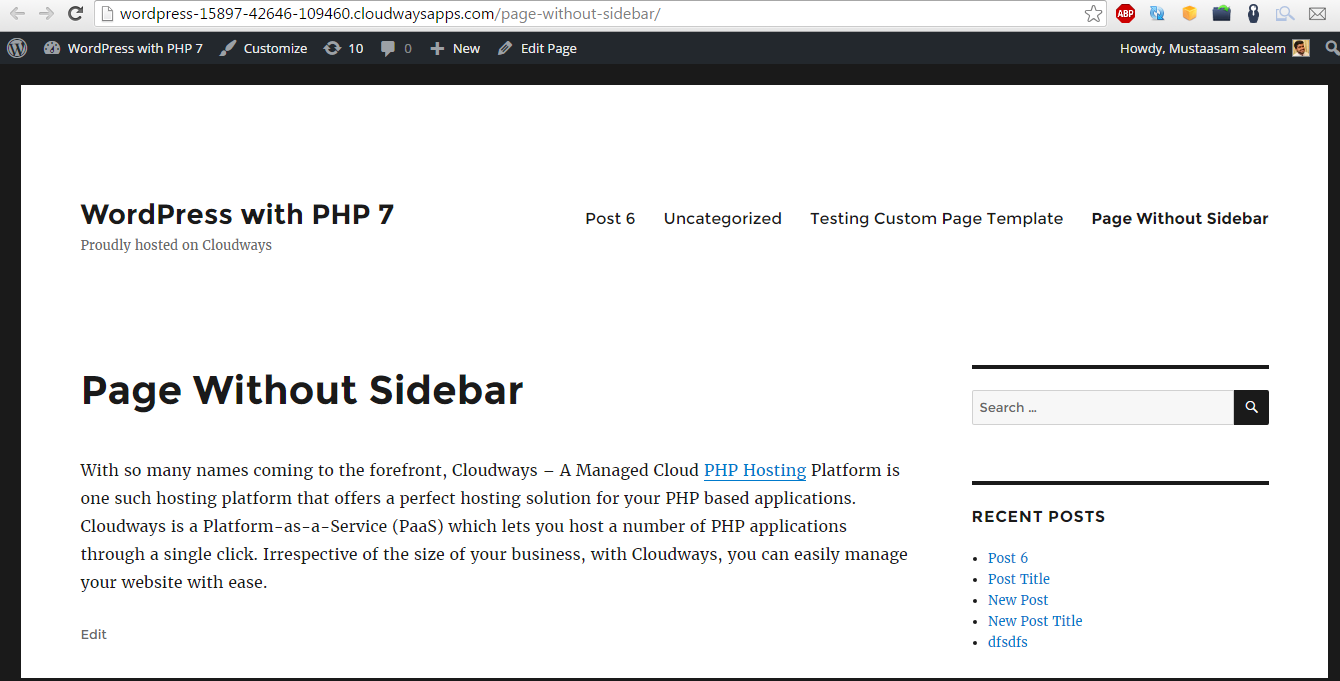
Now let the states customize it. Every bit you can see there is a sidebar on the right side. I will remove it from this folio merely. All other pages will have the default advent of the Twenty 16 theme.
Open the file PageWithoutSidebar.php file. Scroll down till the stop of the file and remove:
<?php get_sidebar(); ?>
This is the line of lawmaking that gets the sidebar on the page. After removing the line, salve it. Open up the page'due south URL and the sidebar is no more than!
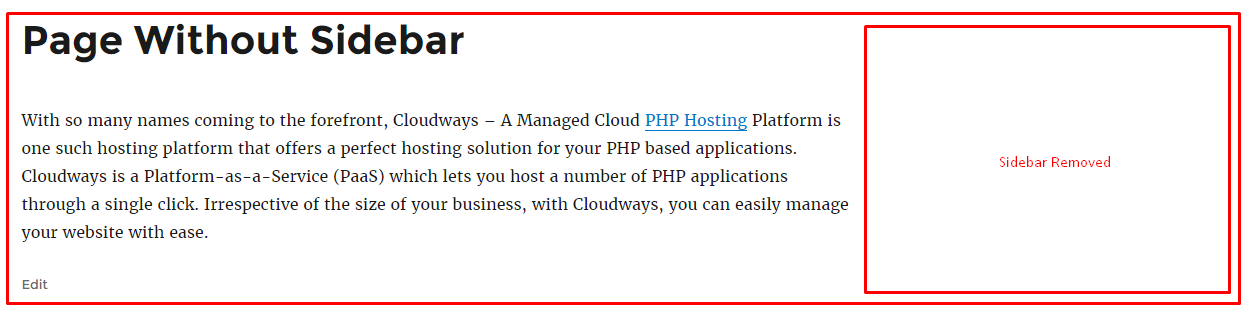
As you lot can see, the sidebar has been successfully removed from this folio. However, the text alignment is non good. There is a bare space on the right side. The fix is to justify and extend the text to fill up the screen.
Become back to PageWithoutSidebar.php and detect:
<div id="primary" course="content-area">
Just alter "content-expanse " to "site-content-fullwidth" and you're washed. Refresh the page and the content is full width.
WordPress Themes Perform Faster on Cloudways
300x Faster WordPress Websites – Check it out yourself
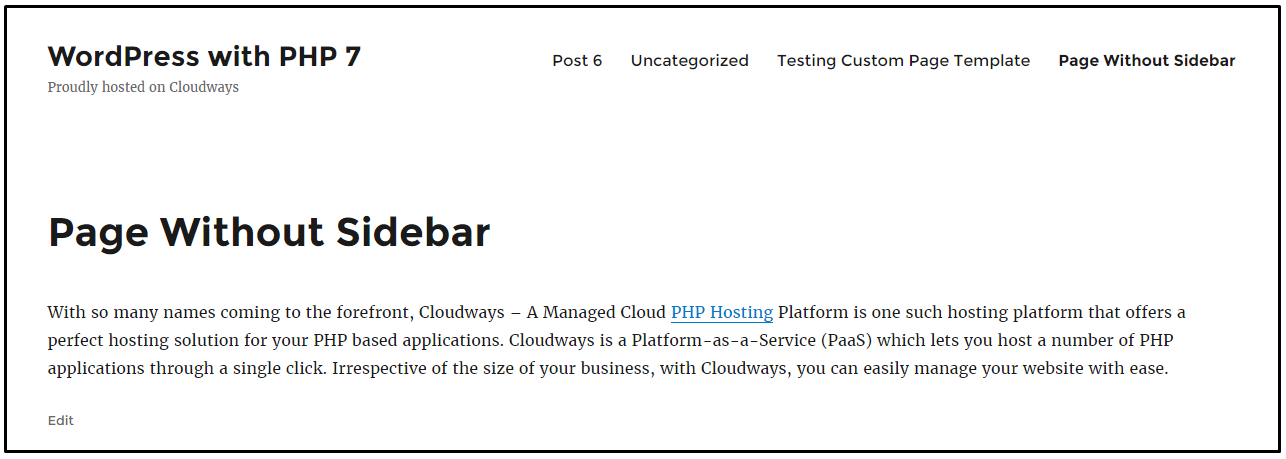
Still curious about why I have created a custom page template when I could have easily edited the page.php file? Information technology's quite obvious that if page.php file is edited, all the pages across the website would show the changes. In guild to apply customized advent on specific pages, the custom page template in WordPress comes in handy. Yous can too define a custom user role in WordPress in order to assign different privileges to users.
If you lot've any queries, feel gratuitous to ask by posting in the comment section below.
Share your opinion in the comment section. COMMENT NOW
Share This Article
Client Review at 
"Beautifully optimized hosting for WordPress and Magento"
Arda Burak [Agency Owner]

Mustaasam Saleem
Mustaasam is the WordPress Customs Manager at Cloudways - A Managed WordPress Hosting Platform, where he actively works and loves sharing his knowledge with the WordPress Community. When he is not working, you can find him playing squash with his friends, or defending in Football, and listening to music. You tin email him at [email protected]

How To See A Template In Wordpress,
Source: https://www.cloudways.com/blog/creating-custom-page-template-in-wordpress/
Posted by: crabtreelunarned.blogspot.com
0 Response to "How To See A Template In Wordpress"
Post a Comment